


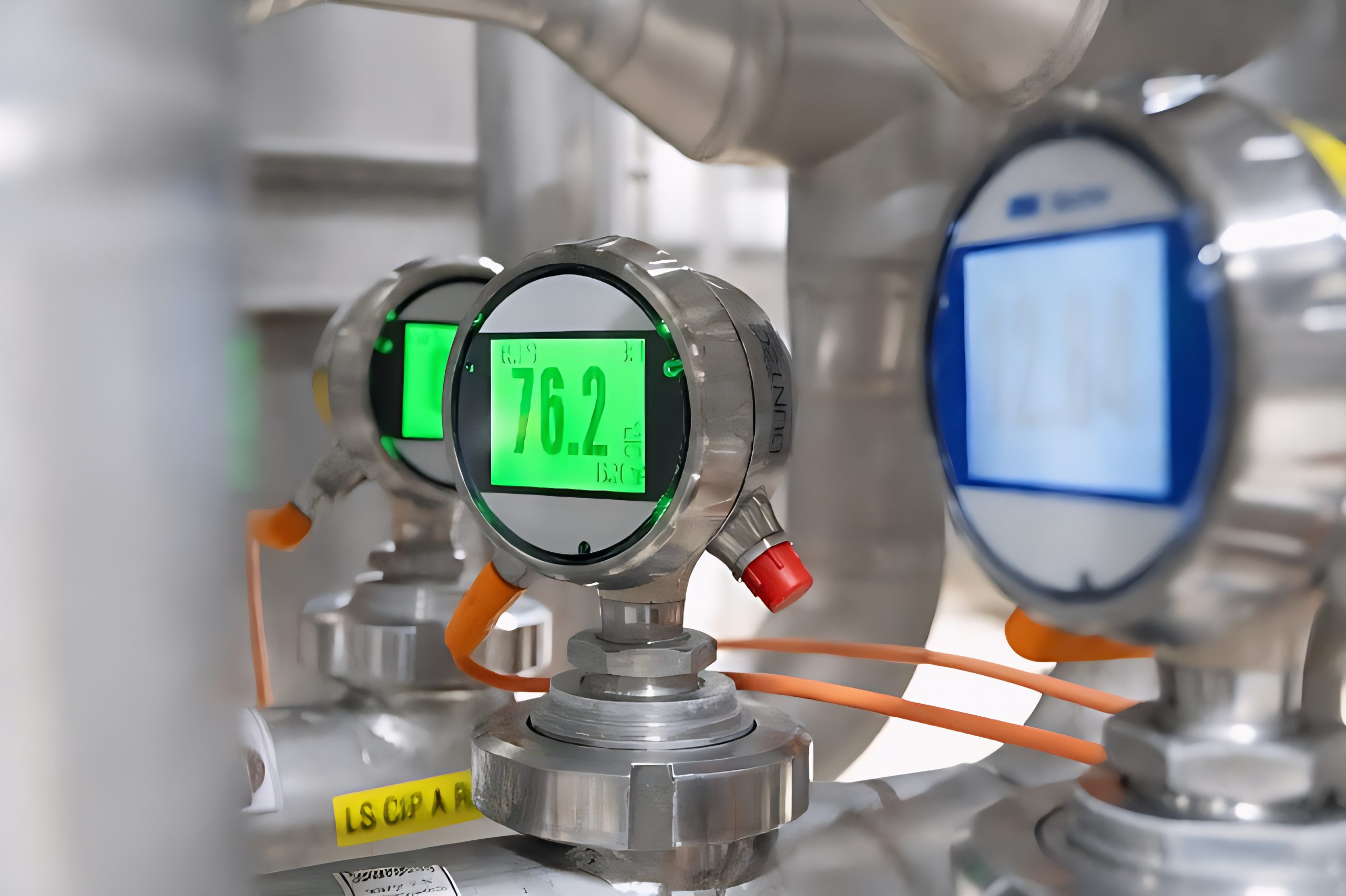

Every day, up to 80 CIP (clean-in-place) cleaning cycles run at the Thalfang cooperative company of Hochwald Foods GmbH. Not every sensor can permanently withstand extreme material stress and constant temperature jumps. Therefore, the German experts in condensed milk set out to find the perfect sensor partner for conductivity measurement.
By Holger Thissen, PR Manager, Baumer Group
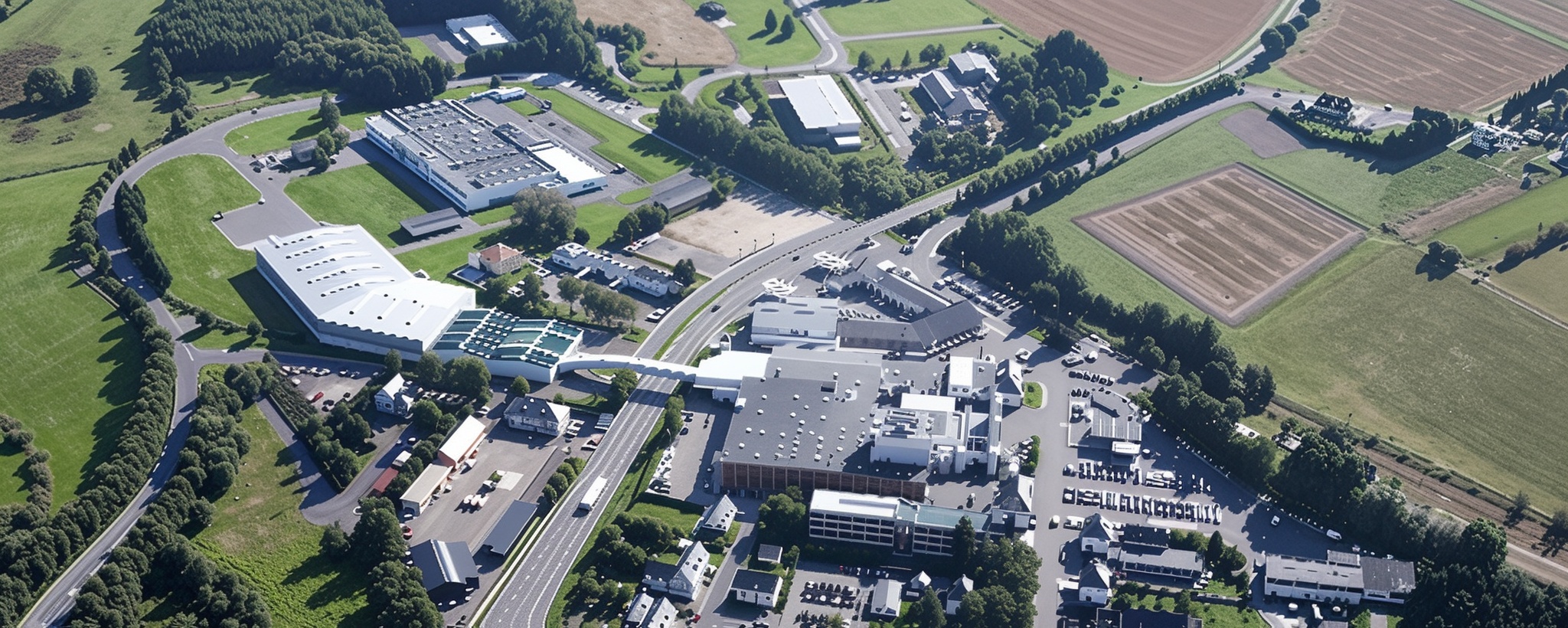
The milk never stops flowing. Every day, up to 1.3 million liters rush through the steel pipes of the Hochwald Foods GmbH dairy company in the small community of Thalfang in the Hunsrück region of Germany. The precious raw material from the member dairy farmers is processed into condensed milk and canned all around the clock. Every minute, 600 cans of the non-perishable, thickened milk come off the company’s four canning lines, among them well-known German brands such as Bärenmarke and Glücksklee. “In Thalfang, we turn raw milk into condensed milk for the global market with all in-house processes of canning, sterilizing, labeling, packaging, storing, and loading into sea freight containers,” describes Holger Kuhn, electrical engineering manager. Hochwald Foods even produces its own tin cans and lids.
Hochwald
Hochwald Foods GmbH is a subsidiary of Hochwald Milch eG (both locations in Thalfang/Hunsrück) with 3,082 dairy farmer members, an annual milk volume of 2.17 billion kg, and 1.59 billion Euros in annual turnover. The cooperative dairy company employs 2,065 people at eight plants for dairy products such as cheese, yogurt, cream, and mixed milk drinks. The Thalfang factory, founded in 1932, specializes in condensed milk. Every day, between 800,000 and 1.3 million kg of raw milk are processed into condensed milk and canned by 190 employees. The best-known brands rolling off the line include Bärenmarke and Glücksklee, together with other brands intended for the international market. 98 percent of the cans produced in Thalfang are exported, mainly to North Africa, the Middle East and South America. “In hot countries, non-perishable condensed milk is very popular. Less for coffee, though, but as consumer milk or in tea,” says Mr. Kuhn, electrical engineering manager at the Thalfang factory.
A major challenge in milk processing is the large number of deliveries and production batches due to increasing product diversity. “We process different qualities of milk and attach greatest importance to purity in origin and sorting,” says Mr. Kuhn. The final stage in every delivery of raw milk by the company’s own milk tankers is cleaning. This means 30-40 CIP objects every day. The great number of production batches entails numerous cleaning cycles, since prior to processing any new batch, lines and tanks must be clean and hygienic. Right on the shop floor, Mr. Kuhn’s team runs 30-40 CIP cleaning cycles every day in order to prevent any standstill in milk processing. “No CIP cleaning means no canning,” he says, describing the central role of cleaning-in-place. This must not happen, he says, since milk tankers are constantly arriving at the yard, filling the raw milk silos which are as high as a house.
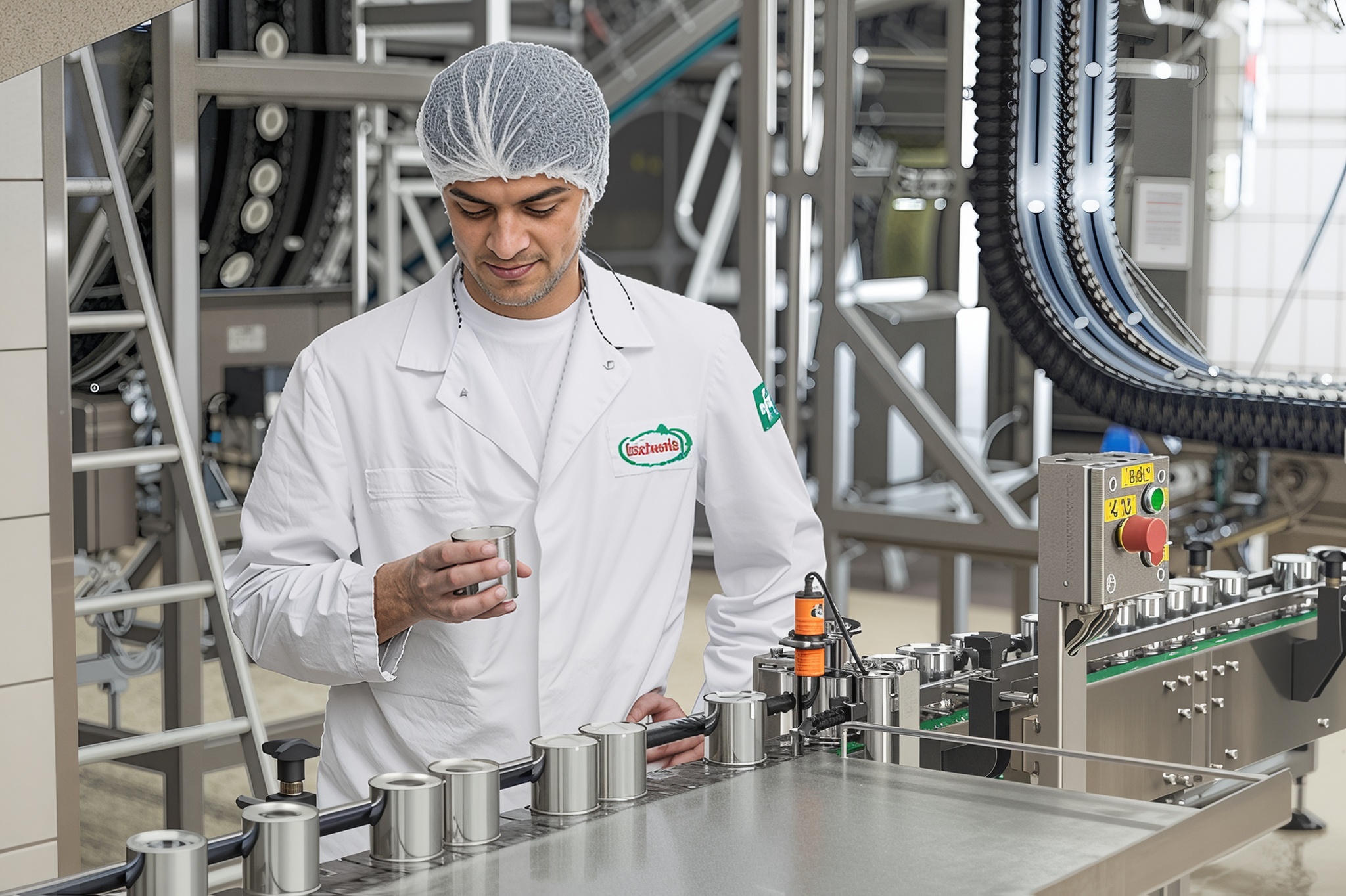
Reliable conductivity measurement is required to make sure CIP cleaning does not block production. Conductivity sensors monitor the concentration of acids and alkalis for the maximum cleaning effect and detect when the pipe is flooded with pure again at the end of a CIP cycle. Conductivity sensors also play a crucial role in phase separation. They identify different media and allow used fluids to re-enter another cycle, an important role in saving resources.
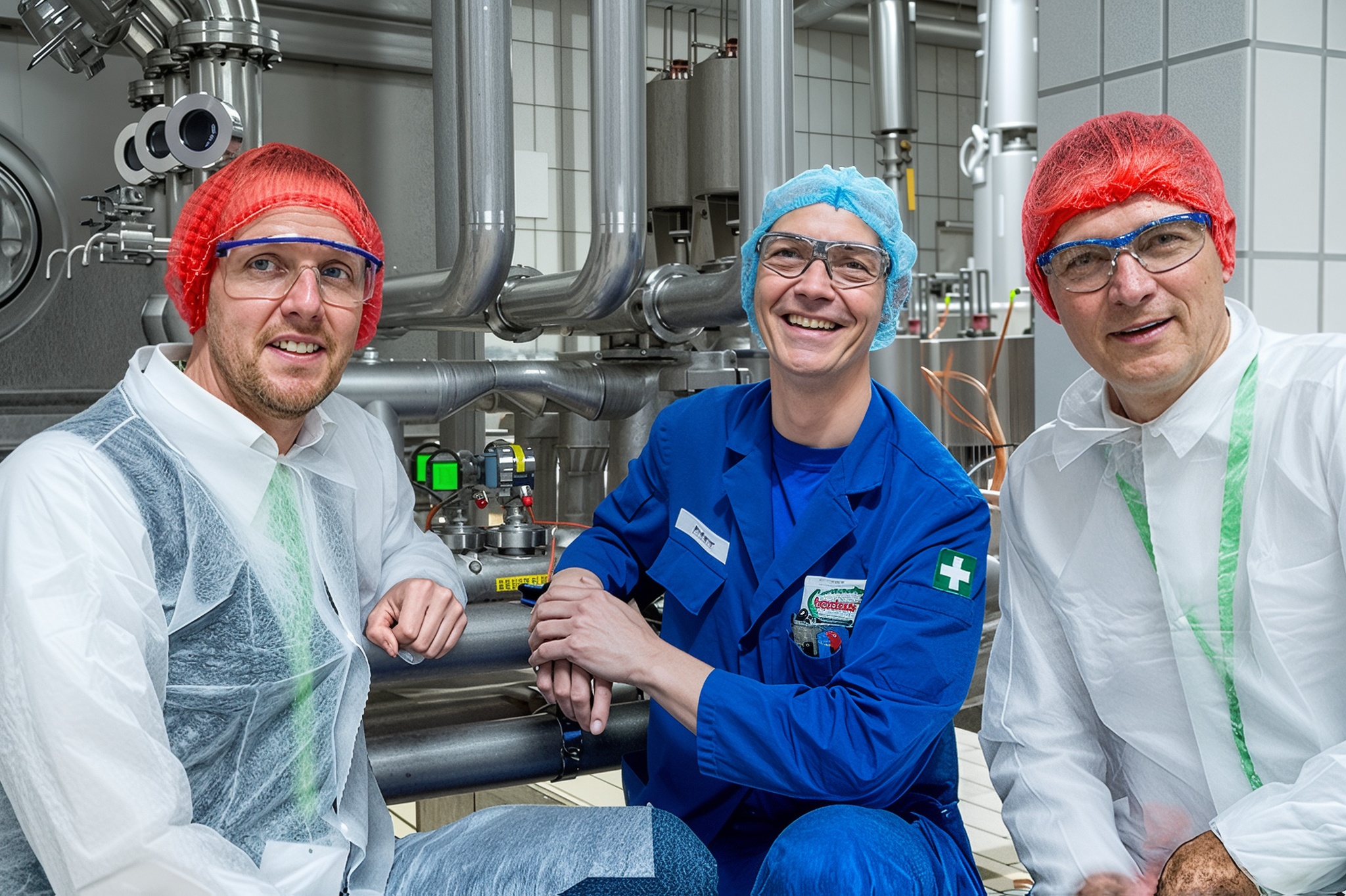
When Mr. Kuhn took over his position as electrical engineering manager in Thalfang eight years ago, he quickly realized that the sensors used for conductivity measurement did not meet his expectations. But even test runs with alternative sensors did not present Mr. Kuhn with the desired results. He wanted the optimum solution for conductivity measurement, so he kept searching.
At some point, the CombiLyz AFI4 ended up on the workbench of the electrical maintenance department. Since the dealer did not answer the service request, an employee investigated the manufacturer of the promising sensor: Baumer. “After the successful test run, we were pleased with the performance of the conductivity sensor, since AFI4 met our needs just as required,” reports Mr. Kuhn. In addition, he was well satisfied with the customer service provided.
Reliability is number one among technical requirements. The AFI4 proves itself every day in up to 80 CIP cleaning cycles. Since having started the cooperation with Baumer four years ago, there has not been a single failure of the AFI4s in use, nor a single housing damaged or leaking. “I am satisfied with an analytical sensor working well for five years. That is why we are on the right track with the Baumer sensors,” says Mr. Kuhn.
Another requirement is short response times with high precision measurements. “AFI4 is very fast and exactly what we need since we deploy the sensor also in phase separation.” To Mr. Kuhn, this is the most important point. With flow volumes of 4-6 liters per second, fast measurement results will noticeably increase resource efficiency. Mr. Kuhn adds: “Thanks to AFI4, we minimize product rejections.” This is also to the benefit of the agricultural shareholders since, besides quality, factory efficiency is decisive in raw milk processing. After all, it is the factory’s objective to make the most of the milk supplied by their member dairy farmers.
How is the AFI4 robust and fast?
The Baumer CombiLyz AFI4 conductivity sensor is popular in food and beverage applications thanks to its durability and speed. One of the reasons for such high robustness is the one-piece design; unlike conventional conductivity sensors, the sensor tip and temperature element are made entirely out of PEEK (polyether ether ketone). By omitting a metal component with different thermal expansion, the sensor tip can endure frequent temperature jumps. Furthermore, thanks to the one-piece design, Baumer is able to achieve an outstandingly fast temperature compensation time of 15 seconds (t90). This design is based on Baumer’s expertise in hygienic ultrasonic welding, which is used in the production of the AFI4 sensing tip. The thin, dark line around the opening in the sensing tip gives evidence of such excellence in welding. All welded products undergo helium leak tests. Like many other Baumer sensors, the AFI4 comes with EHEDG certification.
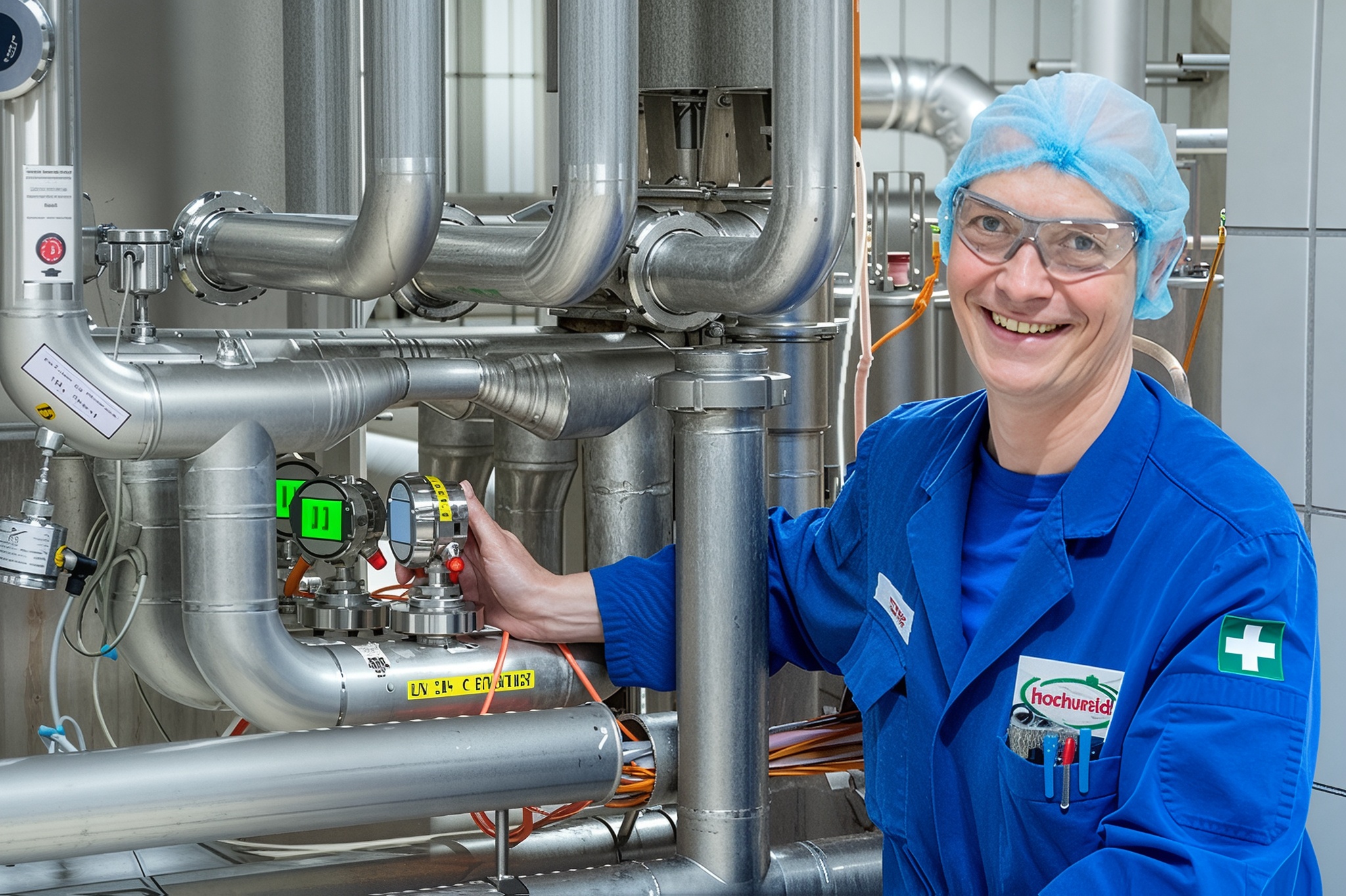
Can the AFI4 deliver top performance over many years, despite the demanding requirements? At Hochwald Foods, there are no signs of performance degradation. The technical team checks each sensor once a year. Out of the 47 currently-deployed AFI4 sensors, a mere two presented drift, but within the tolerances. “The long-term stability is very good,” says Mr. Kuhn. According to him, further AFI4 benefits include the rotatable touch color display, easy handling, compact design, switchable measuring ranges, and adaptable connection system. “This Baumer sensor is freely configurable and hence allows for universal use in every application. This also simplifies and reduces spare part inventory,” adds Mr. Kuhn, who is a strong supporter of standardized solutions.
As a result of the good experience with the AFI4, the manager of electrotechnical engineering has declared the robust Baumer sensor a factory standard. For the upcoming factory overhaul with six new CIP circulations, this means the long-term stable Baumer analysis sensor will continue to make an important contribution towards smoothly running milk processing. For optimal process monitoring, the Baumer PF20 flow sensor, measuring flow velocity in CIP returns, will accompany the AFI4. This will further ensure product quality and prevent time-consuming troubleshooting in the pipe system. After all, non-stop milk processing must be ensured in the future.
About Baumer Group
The Baumer Group is one of the world’s leading experts for high performing sensors and sensor systems in industrial automation. The broad product portfolio, measuring precision and smart sensor functionalities, provide intelligent solutions for digitalized production. With around 2,900 employees and 39 development centers, production sites and sales units in 19 countries, the Swiss family-owned group is always close to the customers. As an innovation leader for more than 70 years, Baumer has been creating decisive market advantages and measurable added value with consistently high-quality standards. For more information, visit www.baumer.com.
We regularly share Featured Stories with our Instrumetrics World community. Join us and let’s share your Featured Story on Instrumetrics World online and in print.